Introduction
Tarot cards offer more than mystical entertainment—they function as a sophisticated framework for structured reflection during decision-making. Rather than predicting predetermined futures, tarot serves as a psychological mirror that externalizes internal conflicts, illuminates blind spots, and organizes complex thoughts into manageable patterns. Each card's archetypal imagery triggers intuitive associations that complement logical analysis, creating a holistic decision-making process.
The psychological benefits are measurable: tarot readings activate both analytical and creative thinking centers, forcing you to articulate concerns, examine options from multiple perspectives, and recognize emotional biases that cloud judgment. In professional contexts, consulting with a Tarot Reader or using a decision-making spread can clarify priorities before major career transitions, helping you identify what truly matters when facing significant choices. Personal readings help navigate relationship dynamics or lifestyle changes with greater self-awareness.
This guide demystifies tarot card meanings for decision making in 2026's fast-paced environment. You'll learn to read individual card interpretations, construct spreads for specific questions, and integrate symbolic insights with rational evaluation. Understanding tarot card meanings for decision making transforms these archetypal symbols into actionable techniques—a reliable thinking tool that enhances rather than replaces critical thinking skills.
Understanding Major Arcana Cards for Key Life Decisions
The 22 Major Arcana cards represent life's most significant archetypal themes and transformative moments. Experienced Tarot Readers often emphasize that these cards carry more weight than the Minor Arcana, as they signal pivotal crossroads requiring conscious awareness and deliberate choice. Professional Tarot Reader services can be particularly valuable when these powerful cards appear, helping to interpret their profound implications in the context of life-changing decisions where the stakes are highest. Unlike the Minor Arcana's everyday situations, these powerful cards indicate transformative moments where your decisions create lasting impact.
The Fool (Card 0) embodies pure potential and new beginnings. When appearing in decision readings, it encourages taking calculated risks and embracing uncertainty with optimism. This card suggests the decision before you opens unexplored territory.
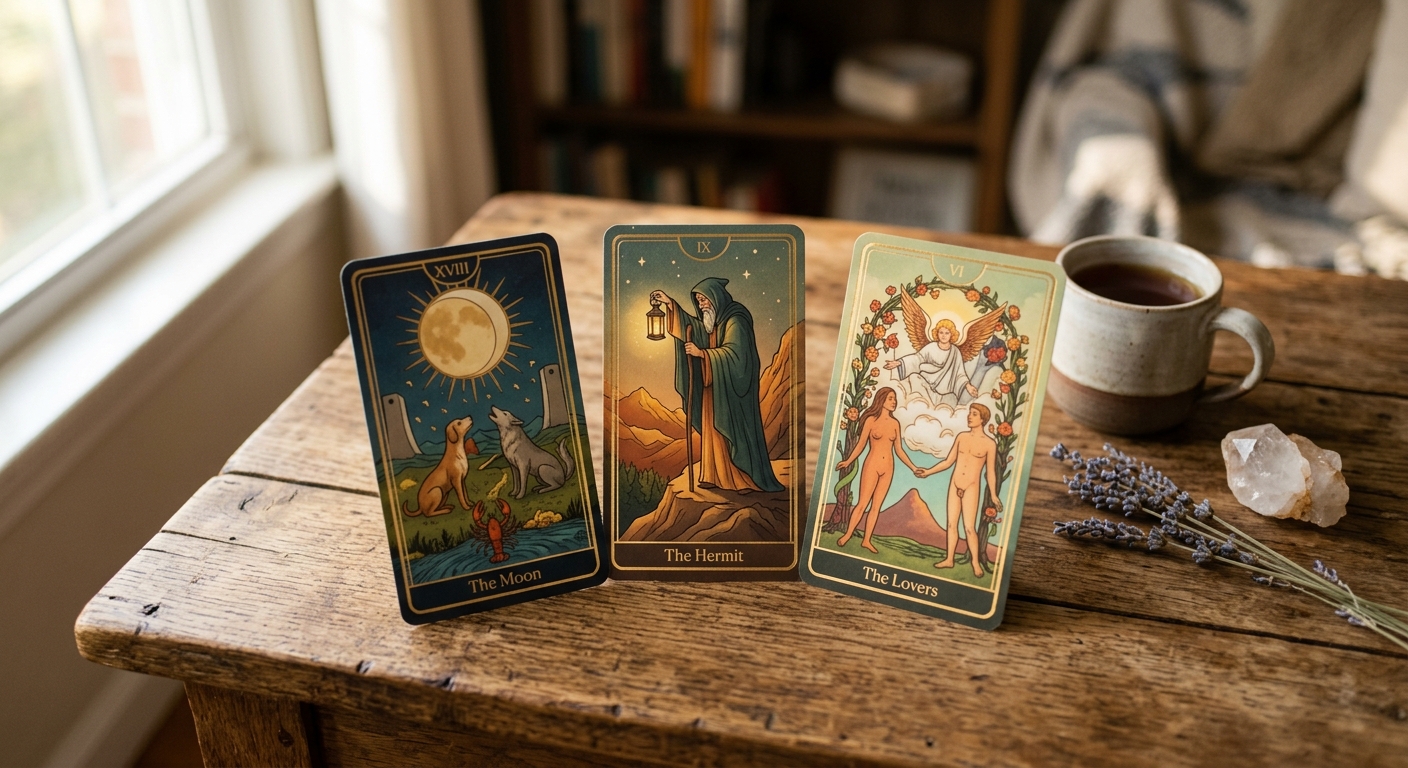
The Lovers (Card 6) directly addresses choice itself—not merely romantic decisions, but any situation requiring alignment between values and actions. It asks: does this choice reflect your authentic self? When The Lovers appears in decision-focused spreads, consulting a Tarot Reader can help you explore the deeper layers of this alignment, especially when grappling with choices that challenge your core values or require reconciling competing priorities.
Justice (Card 11) demands balanced, rational assessment. This card indicates decisions requiring careful weighing of consequences, ethical considerations, and long-term implications rather than emotional impulses.
Wheel of Fortune (Card 10) emphasizes timing and cycles. Its appearance suggests external forces influence your decision, reminding you that some opportunities are time-sensitive.
When interpreting Major Arcana in decision-focused readings, consider their upright or reversed position, surrounding cards, and your intuitive response to their imagery.
Minor Arcana Suits: Practical Decision-Making Themes
The Minor Arcana's four suits offer specialized guidance for different decision categories, each addressing distinct aspects of life's choices.
Cups govern emotional and relationship decisions, emphasizing intuition and feelings. When Cups appear in readings about partnerships, family matters, or personal fulfillment, they guide you to honor your emotional truth. The suit encourages examining how choices align with your heart's desires and relational harmony.
Wands illuminate creative ventures and career paths, focusing on passion, ambition, and growth potential. These cards help evaluate opportunities through the lens of enthusiasm and long-term development, asking whether decisions fuel your creative fire or professional advancement.
Swords address intellectual decisions requiring clear thinking, honest communication, and mental clarity. This suit cuts through confusion in complex situations involving contracts, negotiations, or difficult conversations, demanding logic over emotion.
Pentacles provide practical guidance for financial choices and material security. From investments to career stability, this suit grounds decisions in tangible outcomes and resource management.
For comprehensive decision guidance combining all four suits, explore a Decision Making Spread to address multiple dimensions simultaneously.
Effective Tarot Spreads for Decision-Making Scenarios
The right tarot spread transforms uncertainty into clarity. These proven layouts help you navigate choices with structured insight.
The Two Paths Spread compares distinct options through seven cards. Place two cards for each path's advantages, two for challenges, one for the likely outcome of path A, one for path B, and a final card revealing which aligns with your highest good. This layout illuminates hidden consequences and emotional impacts you might overlook.
Career Crossroads Spread addresses professional decisions requiring deeper analysis. Arrange five cards: your current position, option one's potential, option two's potential, external influences affecting timing, and the recommended action. This spread considers market conditions, personal growth, and practical constraints simultaneously.
For quicker guidance, three-card decision spreads offer immediate perspective using past-present-future or situation-action-outcome positions. The Decision Making Spread provides structured digital readings when time is limited.
Single-card clarity draws work best for yes/no questions or confirming gut feelings. Draw one card after clearly stating your question, interpreting upright positions as favorable and reversed as cautionary signals requiring reconsideration.
Interpreting Card Combinations and Reversed Cards
Understanding how tarot cards interact transforms readings from isolated symbols into cohesive narratives. Adjacent cards create stories that reveal decision complexity—The Tower next to The Star suggests upheaval followed by hope, while The Devil beside The Lovers indicates relationship choices influenced by attachment or unhealthy patterns. These combinations expose interconnected factors affecting your decisions.
Reversed cards offer nuanced perspectives rather than simply negative meanings. They can indicate blocked energy (a reversed Ace of Wands suggesting creative stagnation), delays (reversed Chariot showing postponed progress), internalized issues (reversed Three of Swords reflecting private grief), or alternative viewpoints requiring consideration. In decision contexts, reversals prompt you to examine what's hindering forward movement or which internal beliefs need addressing.
Conflicting cards aren't reading failures—they reveal decision ambivalence. The Four of Cups reversed alongside the Eight of Pentacles might show simultaneous apathy and dedication, reflecting your genuine uncertainty. When using a Decision Making Spread, contradictions highlight competing priorities or values requiring reconciliation. Embrace these tensions as authentic reflections of complex choices, allowing the cards' dialogue to illuminate what truly matters in your decision-making process.
Step-by-Step Process for Decision-Focused Tarot Readings
Conducting an effective decision-focused tarot reading requires intentional preparation and structured methodology. Begin by formulating your question with specificity and neutrality—instead of "Should I quit my job?" ask "What should I consider regarding my career transition?" This open-ended approach invites deeper guidance rather than binary answers that limit insight.
Create your reading environment by finding a quiet space, clearing mental distractions, and centering yourself through deep breathing. Shuffle your deck while holding your decision in mind, allowing intuitive connection to guide when to stop. Draw cards deliberately, maintaining focused awareness on your question throughout.
Documentation proves essential for integrating tarot wisdom with practical analysis. Record each card drawn, your immediate impressions, and how the imagery relates to your situation. Note both intuitive feelings and logical observations about the card's traditional meanings.
After your reading, reflect on how the cards' messages align with real-world factors: financial constraints, timing considerations, relationships affected, and long-term consequences. A Decision Making Spread can provide structured positions for examining multiple decision angles simultaneously. Combine the symbolic guidance with concrete data, creating a holistic decision-making framework that honors both intuition and rationality.
Common Mistakes and Best Practices for Decision Readings
When using tarot for decision-making, avoiding common pitfalls ensures more meaningful insights. One critical mistake is confirmation bias—interpreting cards to support what you already want to hear. This undermines tarot's value as an objective reflection tool. Similarly, "reading shopping" by conducting multiple readings until you receive your desired answer creates confusion rather than clarity.
Asking the same question repeatedly within short timeframes indicates you're seeking validation rather than genuine guidance. Instead, allow time between readings for reflection and action.
Set realistic expectations about tarot's role. It functions as a reflective mirror for your subconscious thoughts and patterns, not an absolute authority predicting fixed futures. Your choices ultimately shape outcomes.
For relationship decisions, establish ethical boundaries. Avoid readings about others without their consent, as this violates their autonomy. A Decision Making Spread should focus on your own path, emotions, and responsibilities rather than trying to control or predict another person's behavior.
Take personal responsibility for your choices. Tarot illuminates perspectives and potential consequences, but you remain the decision-maker. Use insights as one input among many, combining intuitive wisdom with practical considerations.
Integrating Tarot with Modern Decision-Making Frameworks
Tarot doesn't exist in isolation from rational analysis—it thrives when combined with proven decision-making tools. For business decisions, pair tarot insights with SWOT analysis by drawing cards that illuminate hidden strengths, overlooked weaknesses, emerging opportunities, or blind-spot threats. A Decision Making Spread can complement your cost-benefit spreadsheet by revealing emotional factors or timing considerations that numbers alone miss. When conducting risk assessments, tarot helps identify intuitive red flags that merit deeper investigation.
For personal choices, integrate tarot with journaling by recording your card draws alongside written reflections, creating a dialogue between symbolic wisdom and conscious thought. Combine readings with meditation sessions to process insights more deeply, or discuss interpretations with trusted mentors who can offer objective perspectives on your symbolic discoveries.
Track outcomes systematically: maintain a decision log noting the cards drawn, your interpretation, the choice made, and the actual result. Over six months, patterns emerge showing which card meanings resonate most accurately for you, refining your interpretive skills and building confidence in this complementary decision-making tool.
Conclusion
Tarot's greatest strength as a decision-making tool lies not in predicting your future, but in revealing the wisdom you already possess. The cards serve as mirrors, reflecting aspects of your situation you might unconsciously overlook—hidden motivations, unacknowledged fears, or opportunities masked by routine thinking. When you approach tarot thoughtfully, you're not surrendering your agency to mystical forces; you're engaging in structured self-reflection that empowers clearer, more confident choices.
Start your journey with simple spreads like the three-card past-present-future layout. Regular practice builds interpretation skills organically—keep a journal noting which cards appear during specific decisions and how those situations ultimately resolved. This personal database becomes invaluable for recognizing patterns in your decision-making process.
Ready to experience how tarot can illuminate your current crossroads? Try a free AI tarot reading tailored to your specific question. You'll receive personalized guidance within moments, combining traditional card wisdom with modern accessibility. Whether you're weighing a career change, relationship decision, or personal challenge, the cards await to help you discover the answers you're seeking within yourself.