Introduction
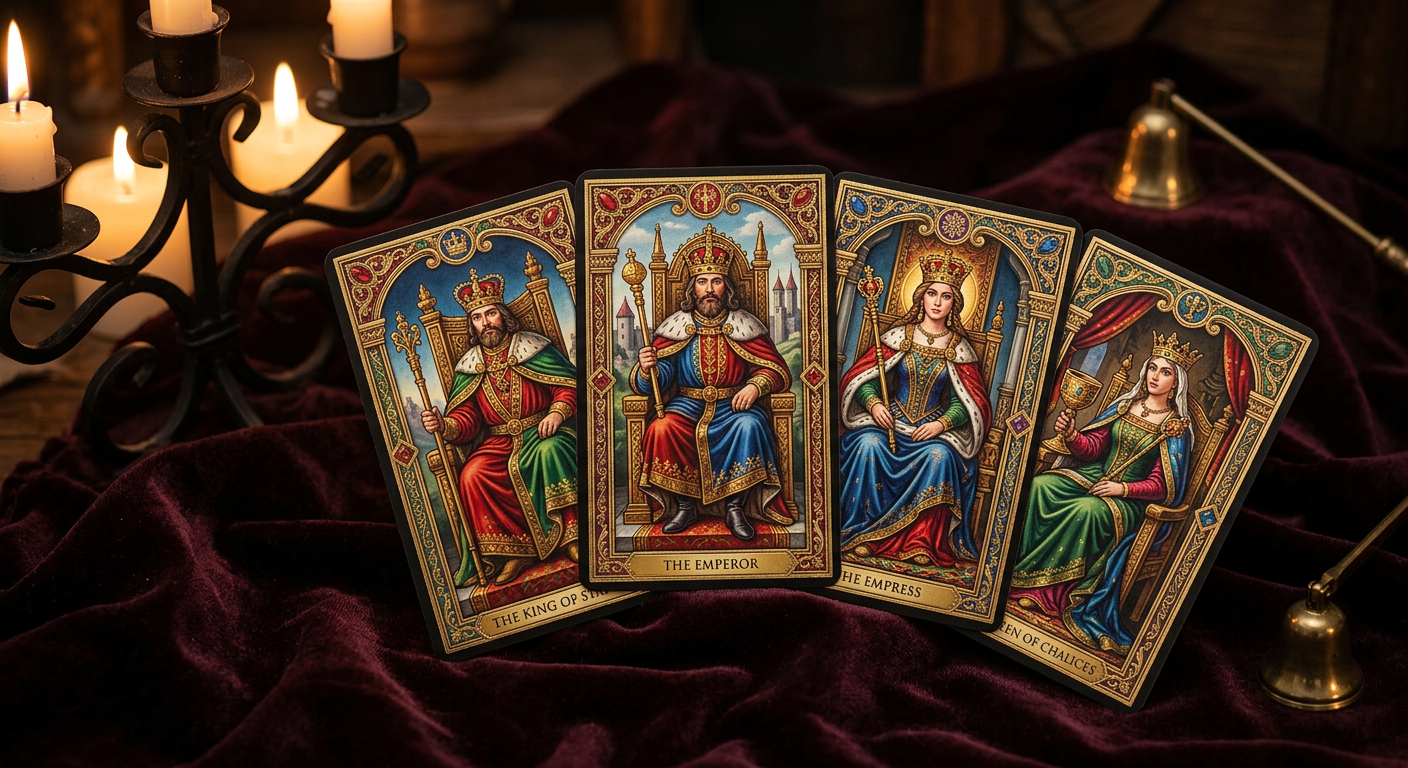
If you've ever shuffled a tarot deck and felt your confidence evaporate the moment a King, Queen, Knight, or Page appeared, you're not alone. Court cards intimidate beginners more than any other cards in the deck, often dismissed as confusing or skipped entirely during readings. Yet these 16 cards—four ranks across four suits—hold extraordinary power for unlocking nuanced, layered interpretations that transform superficial readings into profound insights. While an experienced tarot reader will lean into court cards as some of the most revealing elements of a spread, beginners frequently avoid them altogether, missing crucial details about the people and energies influencing their situation.
Unlike the Major Arcana's archetypal journeys or the numbered cards' situational snapshots, court cards operate on multiple levels simultaneously. They can represent actual people entering your life, aspects of your own personality you're embodying or need to develop, or the specific energy and approach required in a situation. A Queen of Cups might be your empathetic friend, your own nurturing side, or a reminder to lead with emotional intelligence. Learning how to interpret court cards tarot effectively means understanding these multiple layers and knowing which lens to apply.
Mastering court card interpretation doesn't require psychic abilities—just practical frameworks that make these personality archetypes accessible. Once you understand how to interpret court cards tarot as people, personas, and situational guidance, your reading accuracy deepens dramatically, revealing dimensions other readers miss.
1. The Four Ranks: Understanding Court Card Hierarchy
The court cards in tarot follow a natural progression of mastery, each rank representing a distinct stage of development within their suit's element. Understanding this hierarchy transforms confusing court cards into a clear narrative of growth.
Pages represent the beginning of any journey—the student eager to learn. They carry messages, embody curiosity, and approach their suit's element with fresh eyes. The Page of Cups explores emotions tentatively, while the Page of Pentacles studies practical skills with dedication.
Knights bring dynamic action and passionate pursuit. They've moved beyond study into active engagement, often with intense focus but sometimes lacking refinement. The Knight of Wands charges forward with enthusiasm, while the Knight of Swords cuts through obstacles with sharp intellect.
Queens demonstrate nurturing mastery and internal power. They've internalized their element's lessons, expressing emotional intelligence and intuitive command. The Queen of Wands radiates confident creativity from within.
Kings embody external authority and complete mastery. They lead others, make decisive judgments, and wield their suit's power with seasoned wisdom. The King of Pentacles builds empires through practical expertise.
A professional tarot reader uses this developmental framework to provide nuanced interpretations that go far beyond surface-level meanings. By recognizing whether a situation calls for the Page's exploratory energy, the Knight's active pursuit, the Queen's internalized wisdom, or the King's authoritative action, readers can offer guidance that addresses exactly where someone stands in their journey and what their next step should be.
2. Court Cards by Suit: Personality Profiles Across Elements
Each tarot suit expresses its court cards through a distinct elemental lens, creating sixteen unique personality archetypes that appear in readings.
Wands (Fire Element) court cards embody passionate creators and dynamic leaders. The Page brings enthusiastic ideas, the Knight charges forward with entrepreneurial spirit, the Queen radiates confident charisma, and the King masters visionary leadership. These cards represent people who inspire action and drive change through sheer force of will.
Cups (Water Element) court cards flow with emotional intelligence and intuitive wisdom. The Page explores feelings with childlike wonder, the Knight pursues romantic ideals, the Queen nurtures through compassionate understanding, and the King balances emotions with mature empathy. They represent counselors, artists, and empaths who navigate life through the heart.
Swords (Air Element) court cards cut through confusion with intellectual precision. The Page questions everything with curiosity, the Knight defends truth with sharp wit, the Queen analyzes with detached clarity, and the King exercises fair judgment. These strategic thinkers and communicators value logic above sentiment.
Pentacles (Earth Element) court cards ground themselves in practical achievement. The Page studies diligently, the Knight works methodically, the Queen nurtures abundance, and the King builds lasting wealth and security.
3. Reading Court Cards as People: Identification Techniques
When court cards appear in a reading, they often represent specific individuals in the querent's life. Learning to identify these people requires understanding several key markers.
Physical and demographic characteristics follow traditional tarot associations. Wands typically represent people with fair to medium coloring, while Cups suggest lighter features. Swords often indicate medium to darker coloring, and Pentacles represent darker complexions or earth-toned features. Pages suggest young people or children, Knights represent young adults (20s-30s), Queens indicate mature women or feminine energy, and Kings represent mature men or masculine energy.
Personality alignment proves crucial in relationship readings. Match the card's elemental energy to known individuals—fiery Wands personalities are passionate and creative, watery Cups people are emotional and intuitive, airy Swords individuals are intellectual and communicative, while earthy Pentacles types are practical and grounded.
Positional context matters significantly. Court cards appearing in "external influences," "other people," or "obstacles" positions typically represent actual persons rather than aspects of the querent. Multiple court cards in one spread suggest either several people involved in the situation or different facets of one complex individual's personality affecting the outcome.
4. Court Cards as Situations: Energy and Circumstances
Court cards transcend literal interpretations of people to reveal the energetic quality needed in your current circumstances. When the Queen of Pentacles appears, she's advising you to nurture your resources—whether that means tending your budget carefully, investing in self-care, or cultivating a project with patience and practical attention.
Pages signal fresh opportunities knocking at your door. The Page of Cups might indicate a creative project in its infancy, urging you to approach it with curiosity rather than expertise. Similarly, the Page of Wands suggests adopting a beginner's mindset toward a new passion.
Knights demand movement and decisive action. When the Knight of Swords appears, swift communication is essential—send that email, have that difficult conversation, or cut through mental fog with clarity and speed.
Queens invite internal cultivation. The Queen of Swords asks you to process emotions through logic, while the Queen of Cups suggests emotional receptivity to the situation.
Kings recommend authoritative action. The King of Pentacles means establish financial boundaries, while the King of Wands signals taking charge of creative leadership without hesitation.
5. Practical Memory Aids for Beginners
Mastering court cards becomes significantly easier when you transform abstract meanings into concrete memory systems. Start by creating detailed personality profiles for each court card as if they were real people in your life. Write short character sketches describing their appearance, mannerisms, career, hobbies, and catchphrases. For example, the Queen of Cups might be "Sarah, a compassionate therapist who volunteers at animal shelters and always remembers your birthday."
Combine elemental associations with rank energy for instant recall. Pages carry the curiosity of earth, Knights bring the action of air, Queens embody the nurturing of water, and Kings represent the authority of fire. When you encounter the Knight of Wands, think "fiery air"—passionate action and adventurous energy.
Practice assigning court cards to celebrities, friends, or family members. Is your ambitious colleague the King of Pentacles? Does your creative friend embody the Page of Cups? This real-world anchoring makes abstract archetypes tangible.
Commit to daily court card draws exclusively until these sixteen personalities become as familiar as the Major Arcana. You can explore various tarot spreads to practice your interpretations systematically.
Conclusion
Mastering court card interpretation isn't about memorizing rigid meanings—it's about developing an intuitive relationship with these nuanced archetypes through consistent practice and real-world observation. The sixteen court cards represent the full spectrum of human personality and behavior, and they become clearer each time you work with them.
Start building your court card fluency today with a simple daily exercise: identify one court card personality in your life each day. Notice how your colleague's decisive leadership mirrors the King of Wands, or how a friend's emotional support reflects the Queen of Cups. This practice transforms abstract card meanings into tangible, memorable associations.
For guided practice in a supportive environment, consider exploring AI-powered tarot readings that offer immediate feedback on your interpretations. These tools provide structured practice opportunities, helping you recognize patterns and refine your understanding of court card dynamics across different contexts.
Remember, every tarot reader once struggled with court cards. Your interpretation skills will deepen naturally as you continue practicing, observing, and trusting your intuitive insights. The journey from confusion to confidence happens one reading at a time.