Introduction
Every morning presents an opportunity to gain clarity, perspective, and direction for the day ahead. Learning how to use tarot for daily guidance offers a powerful yet accessible tool for self-reflection that requires no psychic abilities or years of study—just curiosity and a willingness to explore your inner wisdom. For those beginning their practice, resources like Tarot Reader provide an approachable way to explore daily guidance without the initial investment in physical decks.
Unlike popular misconceptions, tarot isn't about predicting an unchangeable future. Instead, it serves as a mirror for your subconscious mind, helping you recognize patterns, examine choices from fresh angles, and tap into intuition you already possess. When you draw a card each morning, you're not seeking mystical fortune-telling; you're creating a structured moment for mindfulness and intentional thinking about your day.
The benefits of incorporating tarot into your daily routine extend far beyond the cards themselves. Regular practice sharpens your intuitive abilities, enhances decision-making skills by encouraging you to consider multiple perspectives, and cultivates mindful awareness throughout your day. You'll find yourself naturally pausing to reflect before reacting, noticing subtle emotional shifts, and making choices aligned with your authentic values.
Whether you're a complete beginner or simply curious about establishing a consistent practice, the techniques ahead will show you exactly how to use tarot for daily guidance starting today. Platforms like Tarot Reader can help you implement these daily guidance techniques immediately, whether you prefer physical cards or digital convenience.
Getting Started: Building Your Daily Tarot Foundation
Beginning a daily tarot practice doesn't require elaborate rituals or expensive tools. The foundation starts with three essential elements that make your practice sustainable and meaningful.
Choosing Your First Deck
Select a tarot deck whose imagery speaks to you intuitively. The classic Rider-Waite-Smith remains popular for beginners due to its clear symbolism, but modern decks like The Wild Unknown or The Light Seer's Tarot offer contemporary aesthetics. Hold sample decks if possible, or browse images online. Your connection to the artwork matters more than tradition—when cards resonate visually, interpretation flows naturally.
For those exploring tarot before investing in a physical deck, digital tools like Tarot Reader offer an excellent way to experiment with different card meanings and build familiarity with tarot's symbolic language. Many practitioners use both physical and digital options—physical cards for their tactile ritual quality, and digital platforms for convenience when traveling or during busy mornings.
Creating Your Reading Space
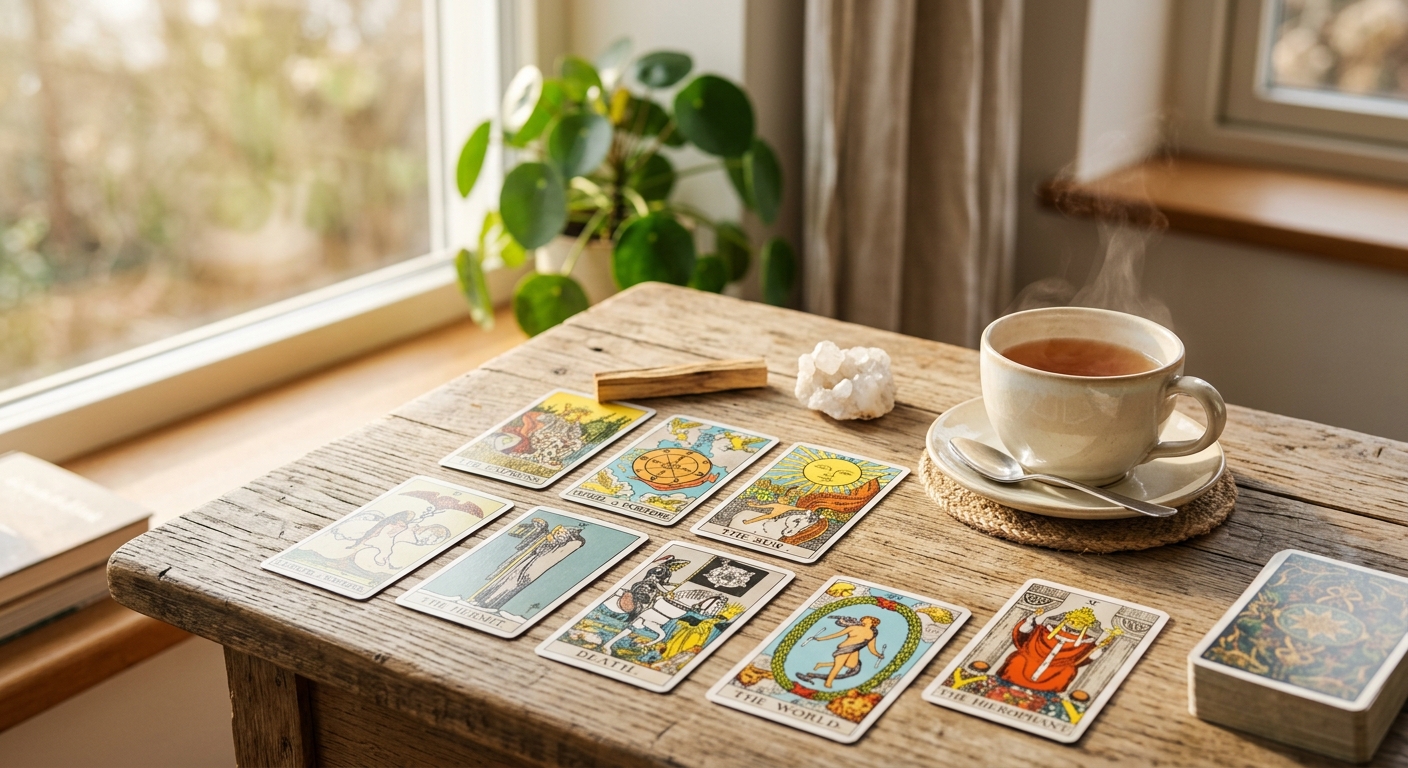
Designate a quiet corner with a clean, flat surface. This needn't be permanent or elaborate. A small table, windowsill, or even a cleared nightstand works perfectly. Keep your deck wrapped in cloth to maintain energetic clarity. Some practitioners add a candle or crystal, but these aren't essential. Consistency of location matters more than decoration.
Setting Clear Intentions
Before each draw, pause to clarify what guidance you're seeking. Frame intentions as open questions rather than yes/no queries: "What energy should I cultivate today?" or "Where does my focus serve me best?" This practice transforms random card-pulling into purposeful self-reflection.
Simple Daily Tarot Spreads for Beginners
Starting your tarot practice doesn't require complex layouts. These three foundational spreads offer clear guidance for everyday situations.
One-Card Daily Draw is your simplest entry point. Each morning, shuffle your deck while focusing on the day ahead, then draw a single card. This card reflects the energy or lesson you'll encounter. Evening draws work equally well for reflection, helping you process what transpired. Ask questions like "What do I need to know today?" or "What energy should I embrace?"
Three-Card Spreads provide deeper context through multiple interpretations. The classic past-present-future layout reveals how previous events influence current circumstances and potential outcomes. Alternatively, use situation-action-outcome to understand challenges and next steps, or mind-body-spirit for holistic self-assessment. Position each card left to right, interpreting their relationship as a narrative.
Situation-Specific Spreads address targeted concerns. For relationships, try a three-card spread examining you-them-connection dynamics. Career decisions benefit from opportunity-challenge-advice layouts. Self-care spreads might explore what to release, embrace, and nurture.
Practice with one spread type weekly before expanding your repertoire.
Step-by-Step Guide to Performing Your Daily Reading
Choose Your Timing Wisely
Morning readings work best when you need guidance for the day ahead, helping you prepare mentally and emotionally for what's coming. Evening readings offer valuable reflection, allowing you to process the day's events and extract deeper meaning from your experiences.
Formulate Meaningful Questions
Avoid yes/no questions. Instead, ask "What energy should I focus on today?" or "What lesson is available to me right now?" These open-ended questions invite nuanced, actionable insights rather than limiting binary answers.
Prepare Your Space and Mind
Take three deep breaths before handling your deck. Clear your mind of distractions and set a clear intention for your reading. This focused state helps you connect more deeply with your intuition.
Shuffle and Select Your Card
Shuffle while concentrating on your question. When you feel ready—trust this intuitive moment—stop shuffling. You can cut the deck intentionally into three piles and reassemble them, or simply pull from the top. Some readers prefer fanning cards face-down and selecting whichever card draws their attention.
Interpreting Your Daily Cards for Practical Guidance
Reading tarot cards effectively requires balancing traditional meanings with your intuitive responses. Start by noting your immediate emotional reaction to the card's imagery before consulting guidebooks. If The Tower appears, for example, the traditional meaning suggests upheaval, but your intuition might connect it to a specific relationship or project needing transformation.
Translate symbolic messages into concrete actions by asking yourself: "What small step can I take today based on this guidance?" The Three of Pentacles might traditionally indicate collaboration, which could mean reaching out to a colleague or joining a community project.
When card meanings feel unclear or contradict your expectations, resist the urge to re-draw. Instead, journal about the disconnect—often the discomfort reveals important blind spots. Consider trying a one card draw for clarification the following day. Remember that "negative" cards rarely predict doom; they highlight areas needing attention. The Five of Cups isn't about permanent loss but redirecting focus from what's gone to what remains.
Building a Sustainable Daily Tarot Routine
Creating a consistent tarot practice requires intentional structure without rigid obligation. Start by designating a specific time—morning coffee or evening wind-down—when you'll naturally integrate your reading into existing habits.
Effective Journaling Methods
Record each card drawn with the date, your initial emotional reaction, and one-sentence interpretation. Later that evening, add brief notes about how the day unfolded. This creates a feedback loop that sharpens your intuitive accuracy over time. Digital apps or simple notebooks both work; consistency matters more than format.
Pattern Recognition
Review your journal weekly to identify recurring cards. The Tower appearing three times in two weeks signals upheaval patterns worth examining. Track which suits dominate—excessive Swords may indicate mental overwhelm, while abundant Cups suggest emotional processing periods.
Avoiding Common Pitfalls
Reading multiple times daily for the same question dilutes clarity and breeds anxiety. Respect uncomfortable cards like the Ten of Swords rather than reshuffling for "better" answers. The practice serves growth, not validation. If readings feel burdensome, reduce frequency to weekly until curiosity returns naturally.
Conclusion
Your journey with daily tarot guidance begins with a single card. There's no need to master complex spreads or memorize every meaning right away—the most powerful practice is often the simplest one. Start each morning by drawing one card and reflecting on its message for just a few minutes. As you build this habit, you'll notice patterns emerging and your intuitive understanding deepening naturally.
Consistency trumps complexity every time. Even five minutes daily with your cards creates more growth than occasional elaborate readings. Your relationship with tarot evolves through regular conversation, not grand gestures. Trust your initial impressions, keep a simple journal, and watch how your interpretations become richer over time.
Ready to explore different perspectives on your daily draws? Try a free AI tarot reading to complement your personal practice. AI readings offer instant insights that can validate your interpretations or reveal angles you hadn't considered. Whether you're shuffling physical cards or exploring digital guidance, what matters most is showing up consistently for yourself and honoring the wisdom that emerges.