Introduction
Have you ever felt drawn to tarot cards but hesitated, thinking you needed special psychic powers or years of training? The truth is far more empowering: learning how to read tarot cards for yourself is an accessible practice that anyone can develop with patience and openness.
Self-reading tarot offers immediate access to guidance whenever you need clarity. Rather than waiting for appointments or relying on someone else's interpretation, you become the expert on your own journey. While consulting a professional Tarot Reader can provide valuable insights and outside perspectives, developing your own practice transforms tarot from a mysterious external service into a personal tool for reflection and growth that's available anytime you need it. Many people find that combining occasional professional consultations with regular self-reading creates the most comprehensive approach to tarot guidance.
You don't need to be born with supernatural abilities to read tarot effectively. What you do need is curiosity, a willingness to trust your instincts, and consistent practice. The cards themselves don't predict a fixed future—they mirror your subconscious thoughts, illuminate patterns you might overlook, and invite deeper self-inquiry.
Reading for yourself deepens your connection with intuition and self-awareness in ways that professional readings cannot replicate. You know your life's context, your questions' nuances, and your inner voice's whispers. This intimate knowledge makes your interpretations uniquely powerful and personally transformative.
Preparing Your Space and Mindset for Self-Reading
Creating the right environment for tarot reading transforms a simple card draw into a meaningful spiritual practice. Your preparation directly influences the clarity and depth of insights you'll receive.
Choosing Your First Deck
Select a tarot deck that speaks to your intuition. The Rider-Waite-Smith remains the most beginner-friendly option, with clear imagery that tells visual stories. Many experienced Tarot Reader professionals recommend this classic deck for those starting their self-reading journey because its symbolism has become the foundation for countless other decks, making it easier to transition to different styles later. Browse several decks and notice which artwork captivates you—your emotional response matters more than popularity. Hold the deck if possible, feeling its energy and weight in your hands. If you're uncertain about which deck resonates with you, consider consulting a seasoned Tarot Reader who can offer personalized recommendations based on your intentions and learning style.
Setting Up Your Sacred Space
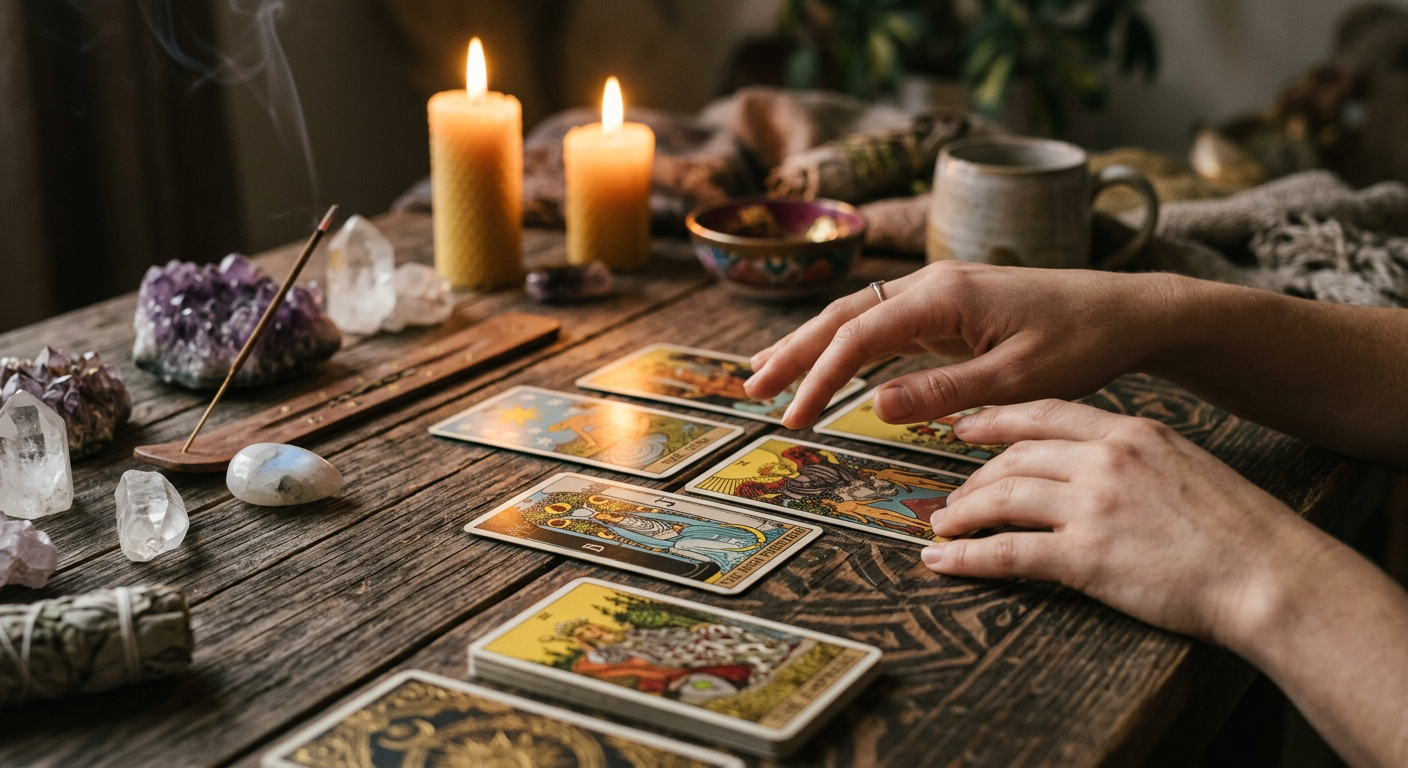
Designate a quiet area free from interruptions. Dim lighting or candles create atmosphere while reducing visual distractions. Sit comfortably at a table with enough space to lay out multiple cards. Some readers incorporate crystals, incense, or meaningful objects, though these remain optional. The essential element is consistency—using the same space builds energetic familiarity.
Formulating Powerful Questions
Craft open-ended questions beginning with "how," "what," or "why" rather than seeking yes/no answers. Instead of "Will I get the job?" ask "What should I know about this career opportunity?" This approach invites nuanced guidance and actionable wisdom from your reading.
Step-by-Step Guide to Your First Self-Reading
Begin your tarot journey with a simple one-card draw to build confidence. Hold your deck, take three deep breaths, and focus on your question or intention. Shuffle using whatever method feels natural—overhand shuffling, riffle shuffling, or spreading cards on a table and mixing them with your hands all work equally well.
When the deck feels ready, stop shuffling and pull your card. Some readers cut the deck into three piles and choose from the middle; others fan the cards and select one that draws their attention. Trust your instincts—there's no wrong approach.
For a three-card spread, arrange cards left to right representing past, present, and future. Each position modifies the card's meaning: a challenging card in the past position shows obstacles you've overcome, while the same card in the future position suggests upcoming lessons.
Record your initial impressions before consulting guidebooks. Notice colors, symbols, and emotional reactions. This intuitive response forms the foundation of authentic self-reading, creating a personal dialogue with the cards that deepens with practice.
Interpreting Cards Through Intuition and Meaning
Reading tarot for yourself requires balancing traditional symbolism with your personal intuitive insights. Begin by learning each card's established meaning—the Fool represents new beginnings, the Tower signifies sudden change, the Cups suit relates to emotions. These foundational interpretations provide your framework.
Once you understand the basics, notice which visual elements draw your eye. Does the red rose in the Magician card spark thoughts of passion? Do the stormy clouds in the Five of Cups resonate with your current mood? These spontaneous reactions are your intuition speaking.
When combining multiple cards, look for connecting themes. A reading with the Three of Swords and Eight of Cups might tell a story about heartbreak leading to necessary departure. Trust the narrative that emerges naturally rather than forcing meanings together.
Your inner guidance becomes stronger with practice. If a card's traditional meaning feels wrong for your situation, explore why. Perhaps the reversed position or surrounding cards shift its message. Free AI tarot readings can help you compare interpretations as you develop confidence in your intuitive abilities.
Maintaining Objectivity and Overcoming Common Challenges
Reading tarot for yourself presents unique obstacles that can cloud your interpretations. The most significant challenge is emotional attachment to outcomes, which can skew your perception of the cards' messages.
Recognizing Emotional Bias
When you're deeply invested in a situation, step back before reading. Notice physical signs like tension, racing thoughts, or a strong desire for specific cards to appear. If you feel anxious or desperate for answers, postpone your reading until you've achieved emotional distance. Consider using free online tarot readings for an objective perspective when emotions run high.
Avoiding Confirmation Bias
Resist the temptation to pull cards repeatedly on the same question. This "fishing for answers" undermines the reading's integrity and creates confusion. Establish a rule: one reading per question per week minimum.
Journal Your Journey
Document each reading with the date, question, cards drawn, and your interpretation. Review monthly to identify patterns in how you interpret certain cards, revealing personal biases and tracking your growth as a reader.
Building a Sustainable Tarot Practice
Establishing a consistent tarot practice transforms occasional card pulls into meaningful spiritual development. Start with a realistic schedule—three readings per week often works better than daily commitments that lead to burnout. Choose specific times when you're mentally clear, whether that's morning coffee or evening wind-down sessions.
A tarot journal becomes your most valuable learning tool. Document each reading with the date, question asked, cards drawn, your initial interpretation, and—crucially—what actually happened. This retrospective analysis reveals which interpretations resonated and where you misread the cards, accelerating your learning curve dramatically.
Balance structured study with intuitive exploration. Dedicate time to learning traditional card meanings through books and resources, but equally important is noticing your personal reactions to imagery and symbolism. The Empress might traditionally represent abundance, but if you consistently feel maternal protection when drawing her, honor that connection.
Consider practicing with online tarot tools between physical deck sessions to maintain engagement during busy periods. Your unique interpretive voice emerges from this blend of knowledge, practice, and personal insight—not from memorizing definitions alone.
Conclusion
Learning how to read tarot cards for yourself is an empowering journey that combines intuition, symbolism, and self-reflection. Throughout this guide, you've discovered that tarot reading isn't a mystical talent reserved for the gifted few—it's a learnable skill that deepens with consistent practice and patience.
Remember that your intuitive responses to the cards are just as valuable as traditional interpretations. Trust those initial impressions while continuously expanding your knowledge through study and practice. Keep a journal, experiment with different spreads, and don't be discouraged by readings that feel unclear at first.
As you develop your skills, consider supplementing your practice with modern resources. Tools like Tarot-Reader.AI offer accessible ways to practice interpretations, explore different spreads, and gain fresh perspectives on card meanings—perfect for building confidence between physical readings.
Your tarot journey is uniquely yours. Start with simple one-card draws, embrace the learning process, and watch as your connection to the cards naturally strengthens over time. The insights you seek are already within you; the tarot simply helps you access them.